

In an era where every customer interaction can make or break a brand, companies cannot afford to leave customer support to chance. With 2024 shaping up to be a year of unparalleled customer expectations, the strategic move to outsource customer support is not just a trend—it’s a critical business decision. Statistics show a clear picture: a single negative experience can drive away 93% of customers, while a positive one can transform 71% of them into brand advocates.
Understanding this, you’re on the quest for excellence in customer service—a journey that begins with choosing a customer support outsourcing partner that doesn’t just answer calls but elevates your brand in every interaction. It’s not just about outsourcing; it’s about partnering with a company that embodies your brand values and champions your customers’ satisfaction.
As we navigate a market dense with options, this article aims to cut through the noise, offering a curated list of the best customer support outsourcing companies.
What is Customer Support Outsourcing?
Customer support outsourcing is the strategic delegation of a company’s customer service operations to a specialized third-party organization. This can include customer interactions on all major channels, such as:
- Phone calls
- Emails
- Live Chats
- Social Media
- Texts
Why Outsource Customer Support?
Outsourcing customer support offers many strategic advantages for businesses looking to excel in today’s fast-paced market:
- Outsourcing can significantly reduce overhead costs by eliminating the need for in-house resources, infrastructure, and training programs.
- It allows companies to direct their internal resources and energies toward core business functions, driving growth and innovation.
- Businesses can easily scale their customer support up or down in response to demand fluctuations, without the constraints of fixed staffing levels.
- Outsourcing opens the doors to a diverse talent pool with specialized skills, often with multilingual capabilities, across various time zones, ensuring customers receive help whenever they need it.
- Third-party providers often have access to the latest in customer support technologies, from AI chatbots to sophisticated CRM systems, providing a competitive edge.
- Outsourced teams can deliver consistent service quality, reflecting positively on the brand.
- Outsourcing companies are adept at handling compliance and regulatory issues, thus reducing risk for their clients.
NEED TO OUTSOURCE? Visit our contact center outsourcing solutions to leverage our global expertise, advanced technology, and tailored solutions that enhance customer engagement and satisfaction.
Top 9 Customer Support Outsourcing Companies to Consider
The search for excellence in customer service outsourcing ends with companies that not only lead with innovation but also drive real human connections. As we delve into the first of 2024’s top customer support outsourcing firms, it’s clear that the blend of technology and empathetic service is reshaping the industry:
1. 1840 & Company
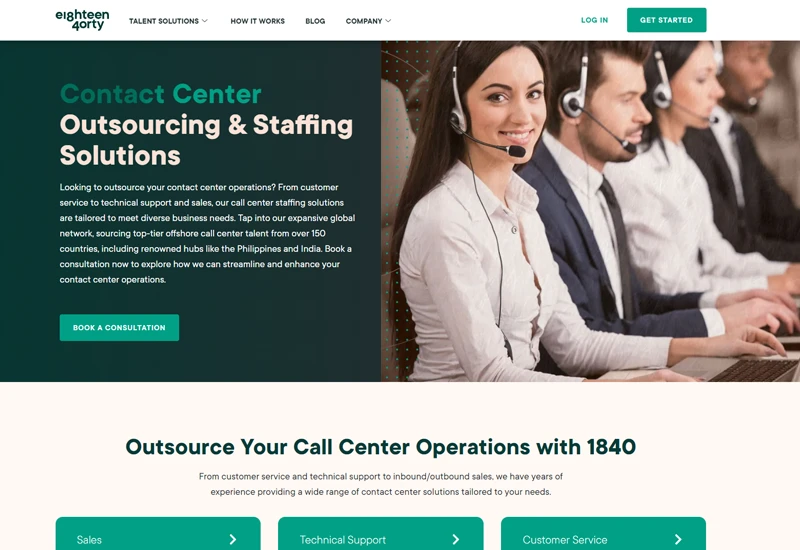
Naturally, we’d like to award ourselves as first on this list. 1840 & Company stands at the forefront of customer support outsourcing, leveraging a global talent cloud to provide unparalleled customer service experiences worldwide. Renowned for blending human expertise with cutting-edge AI technology, we offer tailored customer support solutions that scale across various industries, including tech, e-commerce, and more. Our strategic approach to outsourcing extends beyond transactional support, aiming to enhance customer loyalty and brand reputation through every interaction.
With a global workforce adept in managing complex customer queries, we bring offer affordable customer service, empowering clients with solutions that drive growth, enhance customer satisfaction, and streamline operational efficiency.
PROS
- Access to a diverse, expert talent pool
- Utilization of leading-edge AI technology
- Customized outsourcing solutions
- Effective cost management strategies
- Wide-ranging global service delivery
2. Concentrix
Concentrix stands out in the competitive landscape of customer support outsourcing with its comprehensive approach to transformative CX management. With a global presence that spans across continents, Concentrix provides a full spectrum of customer engagement services, from traditional voice support to advanced digital and social media platforms. Their commitment to creating exceptional customer experiences is evidenced by their deployment of innovative solutions, analytics, and continuous improvement strategies that tailor services to meet the ever-evolving demands of consumers.
Concentrix’s expertise is underscored by a robust infrastructure that promotes operational excellence and agility, enabling them to respond swiftly to the dynamic needs of their clients. This, coupled with a deep understanding of various industry verticals, allows Concentrix to offer targeted solutions that drive customer satisfaction and loyalty while delivering measurable business outcomes.
PROS
- Robust omnichannel capabilities
- Global footprint with local expertise
- Strong focus on analytics and continuous improvement
- Industry-specific solutions
- Proactive approach to customer engagement
3. TTEC
TTEC, formerly known as TeleTech, has firmly established itself as a leader in the customer support outsourcing arena, providing businesses with an expansive range of customer engagement services. Their expertise in marrying technology with human touchpoints creates a holistic customer experience across all platforms. TTEC’s commitment to innovation is evident in their use of data analytics and process optimization to continuously elevate the customer journey and drive meaningful connections.
With a global team that is trained to navigate the complexities of customer relations, TTEC offers a seamless integration of digital and human-centric solutions, ensuring that their clients receive a comprehensive strategy for customer satisfaction and retention. This dedication to excellence has made TTEC a go-to partner for companies looking to outsource their customer support operations.
PROS
- End-to-end customer engagement services
- Strategic blend of technology and human interaction
- Data-driven insights for service enhancement
- Global presence with culturally attuned support
- Specialization in transformative customer experiences
4. Alorica
Alorica is recognized in the customer support outsourcing industry for their personalized and results-driven approach to customer interactions. They offer a wide array of customer contact solutions, specializing in both inbound and outbound services for a diverse client base that spans from healthcare to high-tech industries. With a focus on creating meaningful connections, Alorica designs customer experiences that not only resolve issues but also build loyalty and enhance brand value.
Alorica’s strength lies in their scalable solutions that accommodate the ebb and flow of customer service demands, backed by a deep well of industry-specific expertise. They invest in understanding the nuances of each client’s business, which translates into more effective and empathetic customer service. This dedication to client success is what positions Alorica as a competitive force in the outsourcing market.
PROS
- Tailored customer interaction strategies
- Extensive industry-specific knowledge
- Flexible and scalable service options
- Strong track record in building customer loyalty
- Comprehensive inbound and outbound service offerings
5. PartnerHero
PartnerHero differentiates itself in the customer support outsourcing field by emphasizing bespoke, culturally aligned partnerships with their clients. They specialize in providing startups and scale-ups with dedicated support teams that integrate seamlessly with existing in-house operations. By aligning closely with the brands they serve, PartnerHero becomes an extension of the client’s team, upholding brand values and delivering consistent, high-quality customer experiences.
Their approach is unique in its blend of the personal touch of in-house teams with the efficiency and scalability of outsourcing. With a global workforce that is carefully selected and trained, PartnerHero ensures that every customer interaction is handled with expertise and genuine care. This customer-centric strategy has earned PartnerHero a reputation for fostering community and connection in every support interaction.
PROS
- Custom-fit support models for startups and scale-ups
- High cultural alignment with client brands
- A focus on delivering authentic customer interactions
- Scalable solutions that grow with the client’s needs
- Rigorous training and quality assurance processes
6. Boldr
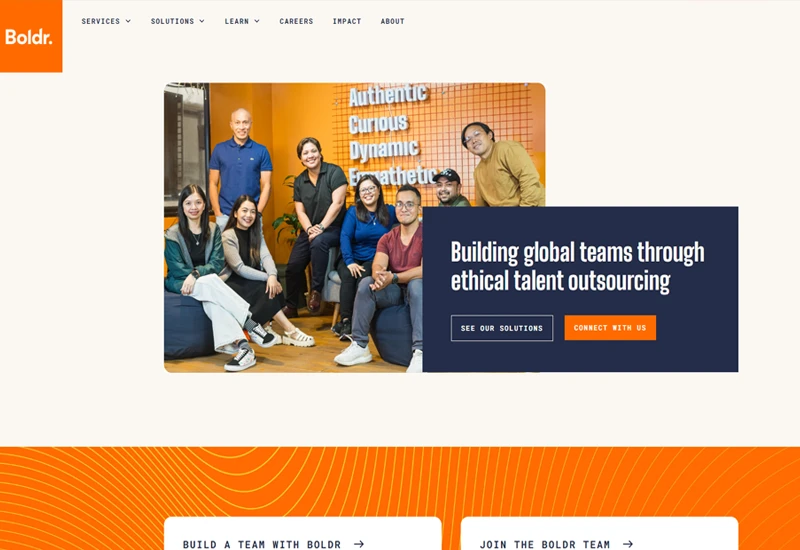
Boldr operates as a strategic partner in the customer support outsourcing industry, setting itself apart with a mission-driven approach that prioritizes social impact alongside client success. Known for offering a suite of services that extend beyond traditional customer service, Boldr provides data management, sales enablement, and content moderation services. Their model is built on establishing transparent, authentic connections with clients, empowering a workforce that delivers exceptional and impactful customer experiences.
With a commitment to fostering growth for both their clients and their employees, Boldr takes a people-first approach, ensuring that each interaction is handled with care, intelligence, and empathy. This philosophy has not only cultivated a loyal client base but also a dedicated team of professionals who are invested in the success of the companies they serve.
PROS
- Ethical and mission-driven business model
- Diverse service offerings beyond customer support
- Emphasis on transparency and authentic relationships
- A people-first approach that nurtures team investment and client satisfaction
- Commitment to continuous improvement and social impact
7. Foundever
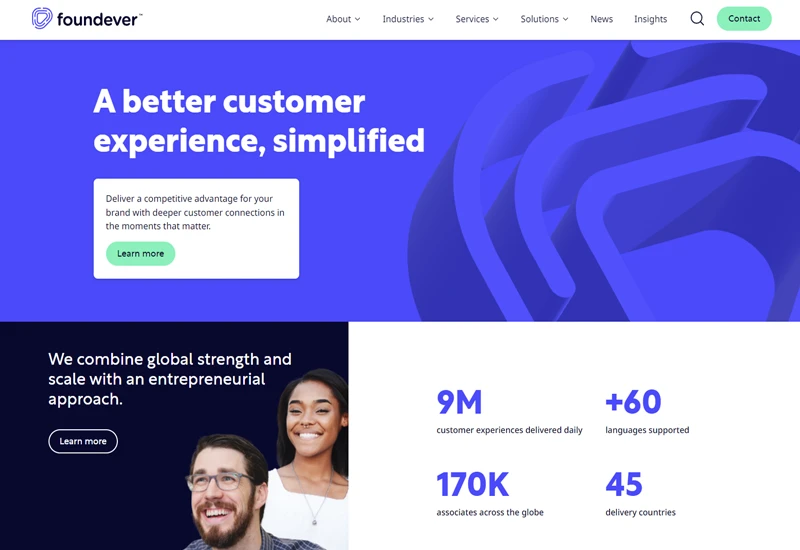
Foundever, previously known as Sitel and Sykes, has earned its place as a top-tier customer support outsourcing firm by specializing in creating empathetic and effective customer interactions at scale. With a robust global presence, Foundever delivers support in numerous languages and across a multitude of platforms, ensuring a seamless customer service experience. Their services are bolstered by state-of-the-art technology and analytics, allowing for personalized customer engagement strategies that drive satisfaction and loyalty.
The strength of Foundever lies in its ability to adapt to the unique needs of each client, providing tailored solutions that are both innovative and efficient. Their commitment to operational excellence and a customer-centric approach has made them a preferred partner for businesses seeking to elevate their customer support functions.
PROS
- Multilingual support across a global network
- Personalized engagement strategies backed by advanced analytics
- Scalable solutions to meet diverse client needs
- Focus on technology-driven service improvements
- Proven track record in enhancing customer satisfaction and loyalty
8. WOW24-7
WOW24-7 stands as a notable contender in the customer support outsourcing arena, recognized for its exemplary 24/7 customer service provision. Catering to a wide array of sectors including eCommerce, SaaS, and technology, WOW24-7 offers scalable and flexible solutions tailored to the specific needs of its global clientele. Their commitment to exceptional service is evidenced by their strategic use of omnichannel support, ensuring customers receive prompt and proficient assistance through any platform, at any time.
By prioritizing customer satisfaction and leveraging their expertise in various industries, WOW24-7 not only solves customer issues efficiently but also contributes to enhanced customer retention and brand loyalty. Their dedication to creating positive customer experiences and their ability to act as a true extension of a brand’s team makes them a valuable partner for companies looking to outsource their customer support.
PROS
- 24/7 customer support across multiple channels
- Tailored solutions for diverse industry needs
- Emphasis on customer satisfaction and retention
- Expertise in handling complex support scenarios
- Ability to scale services in line with client growth
9. Teleperformance
Teleperformance is a global giant in the customer support outsourcing industry, renowned for its comprehensive array of customer experience management services. With a presence in over 80 countries and multilingual capabilities in 265 languages, Teleperformance offers a truly global solution to customer care challenges. They integrate the latest in technological advancements with a human-centered approach to service, providing clients with both innovative and empathetic customer support solutions.
The company’s robust infrastructure and commitment to quality have made it a leader in managing customer interactions efficiently and effectively, ensuring a consistent and satisfactory customer experience. Teleperformance’s ability to blend scale with personalization makes them a top choice for organizations aiming to enhance their international customer service operations.
PROS
- Extensive global presence facilitating worldwide coverage
- Exceptional multilingual capabilities for diverse customer bases
- Strong emphasis on integrating cutting-edge technology
- Proven expertise in delivering consistent customer service outcomes
- Commitment to high-quality and secure service operations
Choosing the Right Outsourcing Company
Selecting the right outsourcing partner for customer support is a strategic decision that impacts not only your customer satisfaction levels but also the overall brand perception.
To ensure you choose the best fit for your company, begin by clearly defining your customer service goals and the specific needs of your business. Consider the scale of support you require: Do you need a provider that can handle a high volume of interactions across multiple languages and time zones?
Evaluate potential partners on their ability to deliver services that align with your brand’s voice and values. Look for a company with a strong track record in your industry and scrutinize their technology stack to ensure they can integrate smoothly with your systems. It’s crucial to assess their commitment to quality and security, particularly if they will handle sensitive customer data.
Finally, select a partner that is transparent about their processes and willing to build a relationship on open communication and mutual trust.
By taking these steps, you can find an outsourcing provider that not only meets your current needs but can also scale with you as your business grows.
Conclusion
Choosing the right customer support outsourcing company is pivotal for enhancing customer satisfaction and fostering long-term loyalty. As you consider your options, focus on partners that align with your brand values, can deliver tailored solutions, and are committed to operational excellence.
If you’re looking to outsource your customer service, schedule a call with our growth experts for a free consultation.