
If you’re thinking about outsourcing to Latin America, chances are you already know the benefits. They’re published everywhere.
Skilled professionals? Check. Time zone alignment? Check. Cultural fit? Check.
No matter the phrasing, they all promise to soften the struggles US businesses face when trying to hire better talent at lower costs.
The catch, though, is that you’ll only reap the rewards when you know all of the details the big-promise pitches tend to leave out conveniently.
In this guide, we cover what you need to evaluate and act on this outsourcing decision. We’ll cover models, compare it to other destinations to identify the right roles, and the info needed to avoid the pitfalls that catch most first-timers off guard.
Outsourcing to Latin America (LatAm): What Does It Mean?
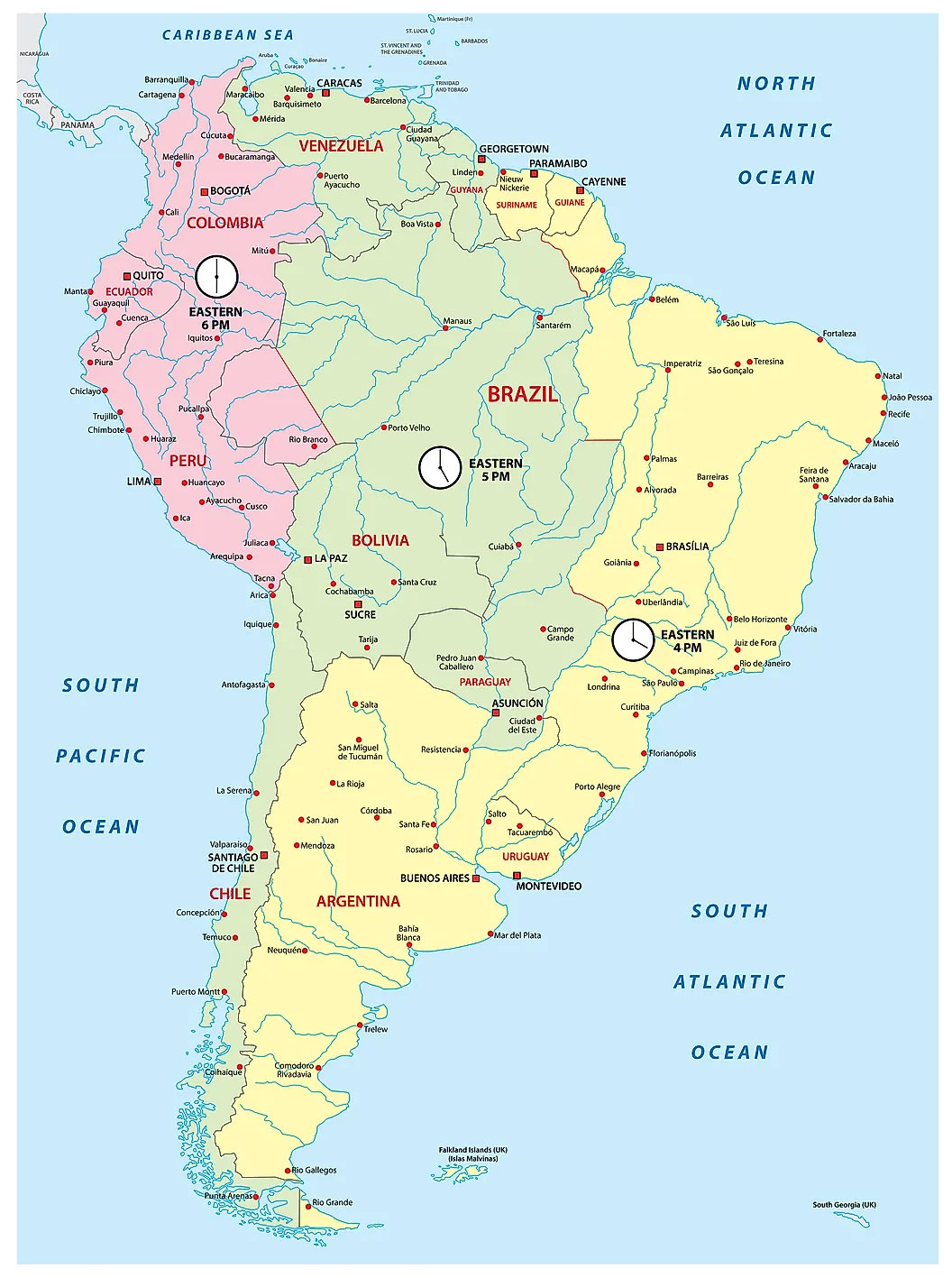
LatAm outsourcing is when you delegate business functions to professionals or partner organizations based in Latin American countries.
For US companies, it operates primarily as a nearshore model with North American business hours, rather than the distant offshore relationships traditionally associated with Asia.
That distinction matters far more than it might initially appear.
Nearshore vs. Offshore vs. Onshore: What’s the Difference?
The three models are often used interchangeably, but they describe fundamentally different working relationships.
Here’s how the three models compare across the factors that matter most in practice:
| Factor | Nearshore: Latin America | Offshore: India / Southeast Asia | Onshore: United States |
|---|---|---|---|
| Cost vs. US domestic rate | 40 – 55% below US rates | 60 – 75% below US rates | Domestic rate – no savings |
| Avg. software developer rate | $40 – $80/hr | $20 – $45/hr | $100 – $160/hr |
| Daily overlap with US East Coast hours | 5 – 8 shared business hours | 0 – 3 shared hours (or night shifts required) | Full 8-hour overlap |
| Average travel time from the US | 3 – 10 hours | 18 – 22 hours | Domestic – same day |
| Collaboration model | Synchronous, real-time | Largely async with structured handoffs | Fully synchronous |
| Cultural alignment with US business norms | High. Shared language exposure, similar work culture | Moderate. Variable by country and provider | Full alignment |
When Does Nearshore Outsourcing Make More Sense Than Offshore?
The honest answer is that offshore outsourcing still works well in specific contexts. A few conditions reliably tip the scale:
- Real-time collaboration is non-negotiable. Any role that requires daily input from US-based stakeholders suffers from a 12-hour time gap.
- The cost of communication errors outweighs the cost of talent. South American and broader Latin American talent pools offer strong English proficiency in professional settings.
- You need the flexibility to scale or adjust quickly. Nearshore engagements allow for faster hiring and more responsive team adjustments.
- Cultural alignment affects output quality. For roles that touch your brand, a team that understands US consumer expectations and communication norms will outperform.
None of this makes offshore outsourcing obsolete. But it does clarify why Latin America outsourcing has become the default choice for US companies.

What Makes LatAm an Appealing Outsourcing Market?
Latin America’s BPO market is projected to reach $79.9 billion in 2028. The infrastructure behind the numbers:
- 2 million+ tech professionals active across the region
- 9,000+ startups are currently operating
- 60 unicorns produced, including Kavak, Rappi, and QuintoAndar
- $184.3 billion in foreign direct investment attracted
- $27.57 billion in IT outsourcing volume projected by 2029
That talent base is distributed across the region, not concentrated in a single country. A few standouts illustrate the depth:
- Brazil: 750,000+ IT professionals (Brazilian Association of Software Companies)
- Colombia: Government-funded initiative to train 112,000 additional software developers
- Argentina: Buenos Aires ranks among the hemisphere’s densest AI and machine learning talent hubs
- Costa Rica: Highest English proficiency in Latin America, with a mature BPO and IT services sector
The functions being outsourced to Latin America have shifted considerably. Finance and accounting outsourcing to the region is forecast to grow 17% through 2026.
The buyer-side data reinforces this:
- 90% of global business services leaders either already operate in Latin America or plan to within three years.
- 50% of companies will incorporate nearshore Latin American talent into a hybrid sourcing model by 2027.
- 62% of Latin American shared services organizations are already deploying automation and analytics at rates exceeding comparable offshore regions
With that foundation established, the more practical question becomes: what does outsourcing to Latin America actually deliver for your business?
Why Should You Outsource to Latin America?
While dozens of other companies are already making the move, let’s talk about why you should.
These six concrete advantages explain why outsourcing to Latin America has become the default choice for US companies.
Significant Cost Savings Without Compromising Quality
Latin American professionals earn significantly less than their US counterparts. But the real savings run deeper than the salary line.
Currency dynamics, lower employer overhead, and reduced infrastructure costs mean the total cost of a LatAm hire is typically 40-55% lower than that of its US equivalent.
How Much Can Businesses Actually Save by Outsourcing to Latin America?
The short answer: considerably more than most companies budget for.
| Savings driver | Estimated impact |
|---|---|
| Labor cost reduction vs. the US equivalent | 40 – 55% |
| Additional productivity gains from nearshore alignment | 10 – 20% |
| Overhead reduction (office, benefits, payroll tax) | 20 – 30% depending on the model |
| Total cost advantage vs. fully loaded US hire | Up to 70% in some roles |
Why Is LatAm Talent Less Expensive Without Being Lower Quality?
The cost difference has nothing to do with a quality differential. It comes down to the cost of living. A senior software developer earning $45,000 annually in Bogotá lives comfortably at a standard equivalent to a $120,000 salary in San Francisco.
Latin American professionals are operating in economies where that compensation goes considerably further.
Time Zone Alignment and Geographic Proximity
No other factor explains why nearshore outsourcing to Latin America outperforms offshore alternatives in day-to-day practice.
How Many Working Hours Do US and LatAm Teams Actually Overlap?
| Country | Local time zone | Hours behind US ET | Shared hours with the US East Coast | Shared hours with the US West Coast |
|---|---|---|---|---|
| Mexico | CST / CDT | 1 hr | 7 – 8 hrs | 8 – 9 hrs |
| Colombia | COT | 0 – 1 hr | 7 – 8 hrs | 8 hrs |
| Costa Rica | CST | 1 hr | 7 – 8 hrs | 8 hrs |
| Brazil | BRT | 2 – 3 hrs | 5 – 6 hrs | 5 hrs |
| Argentina | ART | 2 hrs | 5 – 6 hrs | 5 hrs |
| India (offshore comparison) | IST | 9.5 – 10.5 hrs ahead | 0.5 – 1.5 hrs | 0 hrs |
The geographic proximity reinforces this further. A flight from Miami to Bogotá takes under four hours. Mexico City is reachable from most US cities in two to three hours.
For engagements where occasional in-person collaboration matters, Latin America is the only outsourcing region where that is practically and affordably possible.
A Large and Rapidly Growing Tech Talent Pool
Latin America’s technical workforce has grown, and the region produces a large and rapidly expanding pipeline of STEM graduates annually.
Across South America and the broader region, proficiency in modern development practices has become standard rather than exceptional at the senior level.
What Technical Skills and Programming Languages Are LatAm Developers Strong In?
Strength varies meaningfully by country, which matters when matching a team to a specific technical requirement:
- Argentina: AI, machine learning, data science, Python, and backend engineering.
- Brazil: Full-stack development, mobile (iOS and Android), Java, React, and fintech infrastructure.
- Mexico: Enterprise software, .NET, Java, cloud (AWS and Azure), and IT infrastructure.
- Colombia: Software development, QA engineering, Node.js, and cloud services.
- Costa Rica: IT support, cybersecurity, data processing, and bilingual technical roles.

Cultural Affinity and English Proficiency
Latin American professionals bring a cultural proximity to US business norms that is difficult to quantify but apparent in practice.
Most Latin American countries have incorporated English as a mandatory component of secondary education, and, at the professional level in major urban centers, working-level English is widely expected.
Is There a Language Barrier When Outsourcing to Latin America?
Honestly, it depends on where and at what level you’re hiring.
In major tech hubs like Mexico City, Bogotá, Buenos Aires, and São Paulo, professional English proficiency is high. At the senior and mid-level, communication is rarely a point of friction.
Where variation does exist is in tier-2 cities and lower-seniority roles, particularly in customer-facing functions where accent, nuance, and vocabulary range matter more.
Favorable Government Incentives and Business Environments
Several Latin American governments have moved to attract foreign investment and outsourcing operations, creating tax environments that affect the total cost calculation.
Which Latin American Countries Offer the Best Tax Incentives for Outsourcing?
| Country | Primary incentive | Details |
|---|---|---|
| Mexico | R&D asset deduction + Prosoft grants | 56 – 89% immediate tax deduction on fixed asset investments for tech companies; an additional 50 – 75% deduction on worker training spend through the Prosoft program |
| Colombia | R&D tax credit + Free Trade Zone exemption | 30% tax credit on R&D investment approved by the Ministry of Science, Technology, and Innovation; 100% income tax exemption for companies operating within designated Free Trade Zones |
| Chile | R&D credit + full deduction | 35% tax credit on qualifying R&D expenditures; the remaining 65% is deductible as a standard business expense |
| Argentina | Knowledge Economy Law benefits | Registered software and tech companies pay a reduced income tax rate of 15% vs. the standard 35%, with additional export incentives for technology services |
IP Protection and Data Security
A common concern among companies evaluating outsourcing in Latin America for the first time is whether intellectual property and sensitive data will be adequately protected.
The short answer is yes, provided the right frameworks and contracts are in place. At the contractual level, the key protections to require are:
- IP assignment clauses: Explicitly transferring ownership of all work product to the client company upon creation
- NDA agreements: Scoped to cover code, product specifications, client data, and business processes
- Work-for-hire provisions: Ensuring no ambiguity around who owns what is produced during the engagement
- Permanent establishment (PE) indemnity: Particularly relevant when hiring through an EOR, covering the client against unintended tax obligations arising from LatAm-based operations
With those protections in place, the legal risk profile of outsourcing to Latin America is comparable to that of offshore alternatives.
How LatAm Compares to Other Outsourcing Destinations
Understanding where Latin America sits relative to other regions is what turns a general interest in nearshore outsourcing into a confident, well-reasoned decision.
Latin America vs. India
India remains the world’s largest offshore outsourcing market by volume. For certain high-volume, process-intensive operations, it still makes sense.
But the calculus has shifted. Indian tech salaries have been rising steadily, with WTW reporting a median 10% increase across the outsourcing industry in 2025 alone. The cost gap between India and Latin America has narrowed considerably as a result.
| Cost factor | Latin America | India |
|---|---|---|
| Avg. software developer hourly rate | $40 – $80/hr | $20 – $45/hr |
| Avg. finance and accounting role (hourly) | $15 – $35/hr | $10 – $25/hr |
| Annual salary increase trend | 5 – 8% | 9 – 11% (WTW, 2023) |
| Rework costs from miscommunication | Low. High time zone overlap | High. Async-heavy, limited overlap |
| Management overhead (async coordination) | Low | High |
| Productivity gain from real-time collaboration | 10 – 20% | Minimal. Limited overlap windows |
Latin America vs. Eastern Europe
Eastern Europe (Poland, Ukraine, Romania, Bulgaria) has built a legitimate reputation as a high-quality tech outsourcing destination, particularly for European clients.
For US companies, however, the geography creates a structural disadvantage that no amount of talent depth fully resolves.
| Factor | Latin America | Eastern Europe |
|---|---|---|
| Tech talent pool size | ~2 million professionals | ~1.8 million professionals |
| Projected market CAGR (2025 – 2030) | 7.12% | 6.82% |
| Projected market size by 2030 | $26.02 billion | $7.43 billion |
| Time zone overlap with the US East Coast | 5 – 8 hours | 0 – 2 hours |
| Average senior developer hourly rate | $50 – $80/hr | $45 – $85/hr |
| Flight time from the US East Coast | 3 – 10 hours | 8 – 11 hours |
The talent pool sizes are nearly identical, and the cost profiles are broadly comparable. Where they diverge sharply is on time zone overlap with the US.
Latin America vs. Asia-Pacific (APAC)
The Asia-Pacific region, primarily the Philippines, Vietnam, and to a lesser extent Malaysia and Indonesia, has dominated the BPO and offshore markets for years. That history carries real weight. So does the time zone.
| Factor | Latin America | APAC (Philippines / Vietnam / Malaysia) |
|---|---|---|
| Avg. software developer hourly rate | $40 – $80/hr | $25 – $50/hr (Vietnam); $30 – $55/hr (Malaysia) |
| Avg. BPO / customer service hourly rate | $12 – $22/hr | $8 – $18/hr (Philippines); $10 – $20/hr (Malaysia) |
| Time zone offset from the US East Coast | 0 – 3 hours behind | 11 – 14 hours ahead |
| Shared working hours with the US East Coast | 5 – 8 hours | 0 – 2 hours |
| English proficiency (professional level) | High in major hubs | High in the Philippines, moderate in Vietnam and Malaysia |
| Flight time from the US East Coast | 3 – 10 hours | 16 – 22 hours |
| Cultural alignment with US business norms | High | Moderate. Strongest in the Philippines |
On cost, APAC holds a genuine edge. For companies running large-scale call center operations on tight per-seat budgets, that cost difference is meaningful.

Which Countries in Latin America are Best for Outsourcing?
Country selection matters, and the differences among them are significant enough to be worth understanding before making a hiring decision.
| Latin America’s Top Outsourcing Destinations | ||||
|---|---|---|---|---|
| Country | Talent pool | Avg. dev salary (annual) | Top strength | Best functions |
| Mexico | 700,000+ IT professionals | $35,000 – $55,000 | Proximity and bilingual depth | Software dev, customer service, BPO |
| Brazil | 750,000+ IT professionals | $25,000 – $45,000 | Scale and startup ecosystem | Software dev, fintech, data analytics |
| Colombia | Rapidly expanding | $20,000 – $38,000 | Government-backed tech growth | IT support, software dev, customer service |
| Argentina | High specialization density | $25,000 – $45,000 | AI, ML, and senior engineering talent | Advanced software dev, data science, AI |
| Costa Rica | Smaller but mature | $30,000 – $50,000 | English proficiency and stability | Customer support, IT services, BPO |
Mexico
Mexico is the natural entry point for outsourcing to Latin America. The geographic argument alone is compelling. But the talent story is what has made it a serious destination rather than merely a convenient one.
Key facts:
- Talent pool: 700,000+ IT professionals
- Primary tech hubs: Guadalajara, Monterrey, Mexico City
- software developer annual salary: $35,000 – $55,000
- customer service representative annual salary: $12,000 – $18,000
- Top incentive: Prosoft grants covering up to 50 – 75% of worker training costs; maquiladora program for manufacturing-adjacent operations
- Best for: Software development, IT support, bilingual customer service, back-office BPO
Brazil
Brazil is Latin America’s largest outsourcing market by volume. The country’s Lei do Bem legislation provides meaningful R&D tax credits, making it attractive for building long-term technical operations.
Key facts:
- Talent pool: 750,000+ IT professionals
- Primary tech hubs: São Paulo, Campinas, Rio de Janeiro
- software developer annual salary: $25,000 – $45,000
- customer service representative annual salary: $10,000 – $16,000
- Top incentive: Lei do Bem R&D tax credits, reducing qualifying innovation costs by up to 80%
- Best for: Software and mobile development, data analytics, fintech, AI, and machine learning
Colombia
Colombia has undergone the most visible transformation, rebranding itself as one of Latin America’s most dynamic tech hubs through the Ruta N innovation district.
Key facts:
- Talent pool: 100,000+ active tech professionals, rapidly expanding
- Primary tech hubs: Bogotá, Medellín (Ruta N district), Cali
- software developer annual salary: $20,000 – $38,000
- customer service representative annual salary: $9,000 – $14,000
- Top incentive: 100% income tax exemption within Free Trade Zones; 30% R&D tax credit on Ministry-approved innovation projects
- Best for: Software development, IT support, customer service, QA engineering, bilingual BPO
Argentina
Argentina produces some of the most technically sophisticated engineering talent in the Western Hemisphere.
Key facts:
- Talent pool: 115,000+ registered IT professionals
- Primary tech hubs: Buenos Aires (Distrito Tecnológico), Córdoba, Rosario
- software developer annual salary: $25,000 – $45,000
- senior AI / ML engineer annual salary: $40,000 – $60,000
- Top incentive: Knowledge Economy Law – 15% income tax rate for registered tech companies vs. the standard 35%
- Best for: Advanced software development, AI and machine learning, data science, complex backend engineering
Costa Rica
Costa Rica outperforms destinations that offer lower costs but introduce more operational variability.
Key facts:
- Talent pool: 60,000+ tech and BPO professionals
- Primary tech hubs: San José metropolitan area, Heredia
- software developer annual salary: $30,000 – $50,000
- customer service representative annual salary: $14,000 – $22,000
- Top incentive: 100% income tax exemption for qualifying operations within Free Trade Zones
- Best for: Customer support, IT services, data processing, bilingual BPO, compliance-sensitive operations
The Most In-Demand Roles To Outsource to Latin America
Knowing where to outsource is half the equation. The other half is knowing what to outsource.
Software and IT Development
Latin America’s software outsourcing market has matured well past the staff augmentation model that defined its early growth.
The depth of technical capability across South America and the broader Latin American market now supports everything from early-stage product builds to complex enterprise system migrations.
The most common stacks:
- Backend development: Java, Python, Node.js, and .NET are all deeply embedded in the LatAm engineering culture
- Frontend and full-stack: React, Vue.js, and Angular are standard across the region; full-stack JavaScript teams are readily available in every major market
- Mobile development: iOS (Swift) and Android (Kotlin) expertise is concentrated in Brazil and Argentina
- Cloud and infrastructure: AWS, Google Cloud, and Azure certifications are common among senior engineers in Mexico and Costa Rica
- AI and machine learning: Buenos Aires, in particular, has a concentration of ML engineers that rivals many North American cities.
- DevOps and security: Colombia and Mexico are producing strong DevOps talent aligned with US toolchains, including GitHub Actions, Terraform, and Kubernetes
Finance and Accounting
Finance and accounting outsourcing to Latin America has shifted into one of the region’s most significant growth categories.
The functions being outsourced have followed the talent upmarket:
- Bookkeeper: Day-to-day transaction recording, bank reconciliations, ledger maintenance
- Accounts payable and receivable specialist: Invoice processing, payment runs, collections management
- Payroll specialist: Payroll administration, compliance with local and US reporting requirements
- Financial analyst: Budgeting, forecasting, variance analysis, management reporting
- Controller: Financial statement oversight, internal controls, and month-end close management
- Fractional CFO: Part-time financial leadership for growth-stage companies not yet ready for a full-time hire
Digital Marketing and Creative Services
Digital marketing outsourcing covers a broader range of functions than most companies initially consider.
Functions commonly outsourced within this category:
- SEO and content marketing: English-language content production, technical SEO, content strategy
- Paid media and performance marketing: Google Ads, Meta Ads, and programmatic buying
- Social media management: Community management, content creation, and scheduling
- Graphic design and brand creative: Visual identity, marketing collateral, and digital asset production
- UX and product design: User research, wireframing, prototyping, and UI design
HR, Payroll, and Back-Office Operations
HR and back-office outsourcing are the most immediately impactful moves available to scaling companies. The functions in this category are well-defined, process-driven, and highly cost-sensitive.
Roles most commonly outsourced within this category:
- HR generalist: Onboarding, employee relations, policy management, HR systems administration
- Recruiter/talent acquisition specialist: Sourcing, screening, interview coordination, offer management
- Payroll administrator: Multi-state and multi-entity payroll processing, benefits administration, compliance reporting
- Data entry and administrative support: CRM management, document processing, database maintenance
- Executive assistant/virtual assistant: Calendar management, travel coordination, operational support

How Can I Hire Remote Talent in Latin America?
Building a team is where most companies encounter their first real problems. Not because the talent isn’t there, but because the hiring mechanics in Latin America are more nuanced than a standard domestic recruitment process.
Getting the model right from the start determines almost everything that follows.
Choosing the Right Hiring Model
The first decision isn’t which country to hire in or which roles to fill. It’s how to structure the engagement. For most companies hiring their first LatAm team, here’s a quick breakdown:
| Model | What it is | Best use case | Key trade-off |
|---|---|---|---|
| Nearshore staffing/agency | Partner sources and places talent; client directs day-to-day work | Staff augmentation, extending an existing team with dedicated headcount | Client retains full management responsibility |
| BPO (Business Process Outsourcing) | Provider manages an entire function end-to-end, delivering agreed outputs | Non-core functions where outcomes matter more than process visibility | Less direct control over how work is executed |
| EOR (Employer of Record) | Licensed local entity employs staff on the client’s behalf while the client directs the work | Building a dedicated team without establishing a local legal entity | Ongoing provider dependency for compliance and payroll |
| Direct legal entity | The company establishes its own subsidiary or branch in-country | Large, long-term operations with 50+ headcount in a single country | Significant setup time, cost, and administrative complexity |
| Freelance/independent contractor | Direct engagement with self-employed individuals on a project basis | Short-term, project-based work with low misclassification risk | Highest compliance exposure if engagement resembles employment |
What To Evaluate When Vetting LatAm Candidates and Partners
Hiring remote Latin American teams through the wrong partner is one of the most common and costly mistakes US companies make.
What Are the Red Flags to Watch for When Choosing a Nearshore Outsourcing Partner?
- No verifiable client references or case studies: A reputable partner can point to named clients and documented outcomes; vague testimonials are not a substitute
- Evasive answers about the vetting process: Candidates should be pre-screened for technical skills, English proficiency, and role-specific competencies before they reach you
- No standard IP assignment or NDA clause: Any partner worth working with treats IP protection as a baseline requirement, not a negotiation point
- Inflexible contracts with no pilot option: Legitimate providers are confident enough in their delivery to offer a trial period or phased engagement structure
- Inability to specify candidate sourcing channels: Knowing where talent comes from matters; partners who can’t answer this are likely casting wide nets rather than accessing curated talent pools
- High-pressure sales timelines: Urgency tactics that compress the evaluation process are a reliable indicator that the provider’s value doesn’t hold up under scrutiny
- No documented escalation or replacement process: Performance issues arise in every engagement; what separates good partners from poor ones is how systematically they are handled
Which Challenges of Outsourcing to Latin America Should I Prepare for?
The challenges here are real, but they are also well understood and significantly less severe than those associated with offshore alternatives.
Language and Communication Nuances
The risk isn’t typically fluency at the senior level. It’s the subtler layer: written async communication that loses nuance or feedback that doesn’t land as intended.
None of these is insurmountable, but they require deliberate mitigation from the start:
- English proficiency screening as a non-negotiable hiring filter
- Written communication standards established during onboarding
- Structured feedback protocols
- Bilingual team leads where the function demands it
Infrastructure and Connectivity Variability
Latin America’s major outsourcing hubs have a mature digital infrastructure that supports remote professional work with minimal risk of interruption.
The variability arises when engagements extend to tier-2 cities or when partners source talent from areas with lower infrastructure density.
- This is not a reason to limit hiring to capital cities, but it is a reason to verify before assuming. Infrastructure should be treated as a due diligence item, not a given.
- In practice, that means requiring partners to confirm connectivity standards for each candidate as part of the vetting process, rather than as an afterthought.
- When connectivity requirements are written into the engagement contract, with clear remediation expectations if standards aren’t met, the issue shifts from an operational risk to a managed specification.
Maintaining Quality and Consistency Across Teams
Nearshore Latin American teams outperform offshore alternatives on client satisfaction metrics. That gap exists because time zone alignment and cultural proximity make quality issues visible and addressable in near real time.
| Quality challenge | Practical mitigation |
|---|---|
| Output quality drifting as the engagement matures | SLA with documented quality benchmarks and mandatory quarterly review clauses built into the partner contract from day one |
| Inconsistent delivery without close day-to-day oversight | Sprint-based or milestone-based delivery structure with defined acceptance criteria per deliverable, not per period |
| Knowledge loss when team members transition off the engagement | Mandatory documentation requirements in the SLA; partner retention rate tracked as a contractual KPI |
| Standards vary across individual team members | Standardized output templates and peer review processes that don’t depend on real-time management to function |
| Misaligned expectations on what “done” means | Detailed written acceptance criteria agreed upon before work begins, not communicated verbally during kickoff |
Political and Economic Risk by Country
The honest version of this section is that most of Latin America’s established outsourcing destinations carry a lower political risk profile than their reputation might suggest.
And the countries with genuine instability are largely not the ones where significant outsourcing activity is concentrated.
- Mexico – Low to moderate risk. The major outsourcing hubs operate in well-established business environments. Security concerns exist in certain regions, but don’t materially affect established tech and BPO operations.
- Brazil – Moderate risk. Political transitions occur, but business continuity in São Paulo’s commercial sector has remained consistent.
- Colombia – Low to moderate risk. The country has experienced significant improvements in stability over the past 15 years. T
- Argentina – Moderate to elevated risk on the economic side. Peso instability and periodic capital controls are real considerations for companies paying in USD.
- Costa Rica – Low risk. Consistently one of the most politically stable countries in the region, with a long track record of business-friendly governance and an established multinational presence that creates institutional predictability.
Is Nearshore Outsourcing to Latin America Actually Worth It?
For the vast majority of US companies, evaluating the model honestly, yes.
The time zone alignment alone eliminates one of the biggest operational failure points in offshore outsourcing.
When nearshore outsourcing to Latin America underperforms expectations, it is almost always due to poor partner selection rather than a fundamental flaw in the model itself.

How To Get Started Outsourcing to LatAm: A Step-by-Step Approach
The companies that move most effectively from evaluating outsourcing to actually running a high-performing LatAm team follow a consistent progression.
Each step resolves the uncertainty that would otherwise stall the next one.
Step 1: Define What You’re Outsourcing and What Success Looks Like
Internal clarity on scope has to come before any external conversation. Which functions are ready to be outsourced? What does good performance look like in measurable terms?
A solid scope document covers:
- Role specifications and seniority requirements
- Expected outputs and delivery cadence
- KPIs that will be used to evaluate the engagement
Companies that skip this step hand a vague brief to a partner and then can’t determine whether the engagement is working.
Step 2: Select the Right Hiring Model
The model determines compliance structure, cost profile, and operational control. Getting this wrong means renegotiating the entire arrangement once work has already started.
As a general guide:
- Dedicated long-term team → nearshore staffing or EOR model
- Full function outsourced end-to-end → BPO engagement
- Short-term or project-based work → contractor or freelance structure
Step 3: Match Your Function to the Right Destination
Country selection should follow from role requirements, not from assumption or geographic familiarity.
| Function | Best-fit destination |
|---|---|
| Software development / AI and ML | Argentina, Brazil |
| Bilingual customer service | Mexico, Costa Rica |
| Finance and accounting | Colombia, Brazil |
| IT support and infrastructure | Mexico, Colombia |
| Back-office and HR operations | Colombia, Argentina |
Defaulting to the most recognizable South American country rather than the most suitable one is one of the most common and costly first-time mistakes.
Step 4: Vet Your Partner Like a Senior Hire
Partner selection deserves more time than most companies give it. The checklist is short but non-negotiable:
- Verifiable client references, such as named companies, not anonymized quotes
- A documented, detailed candidate vetting methodology
- IP assignment and NDA provisions included as standard
- A phased or pilot engagement option before full commitment
If a partner pushes back on any of these, that response is itself the answer.
Step 5: Launch With Structure and Optimize With Data
The first 90 days set working patterns that are difficult to reverse. Invest in onboarding for both the LatAm team and the US-side stakeholders managing the relationship.
From week one: establish the communication cadence, define output standards, and set the review rhythm. From month three onward: use the KPIs from Step 1 to evaluate performance and course-correct before small issues compound.
FAQs About LatAm Outsourcing
How Long Does It Take to Hire and Onboard a Latin American Remote Team?
With an established nearshore staffing partner, the timeline from role brief to first hire runs between two and four weeks for most positions. More specialized roles can take four to six weeks, depending on the depth of vetting required.
Is Outsourcing to Latin America Viable for Startups and Small Businesses?
It works at every company size and, in some respects, works better for early-stage companies than for large enterprises. A single nearshore hire through an EOR model incurs no local entity setup costs and no long-term headcount obligation, making it one of the most accessible international hiring models for smaller organizations.
How Do Latin American Public Holidays Affect Outsourced Team Availability?
Each country operates on its own public holiday calendar. Mexico, Colombia, Brazil, Argentina, and Costa Rica each carry between 12 and 18 public holidays annually, several of which fall on dates when US teams are working. Most experienced nearshore partners flag country-specific holiday schedules as part of their standard engagement setup.
Final Thoughts
Latin America’s emergence as the nearshore destination of choice for US companies is a structural shift that has been building for over a decade and shows no signs of reversing.
What separates the companies getting the most out of Latin America outsourcing from those that struggle is execution.
The right model, the right destination, the right partner, and the right operational foundation make the difference between a nearshore engagement that scales and one that stalls.
The guide above gives you the map. What comes next is the decision.
Ready to build your team in Latin America? 1840 & Company specializes in connecting US businesses with vetted, high-performing remote talent across Latin America. Start the conversation today.